
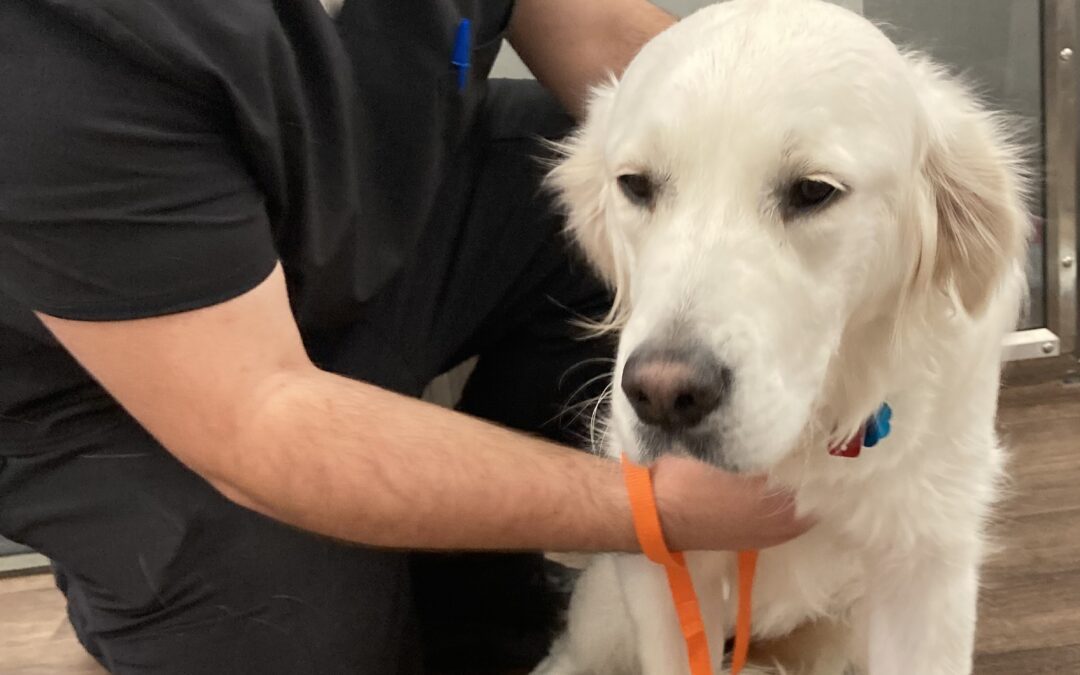
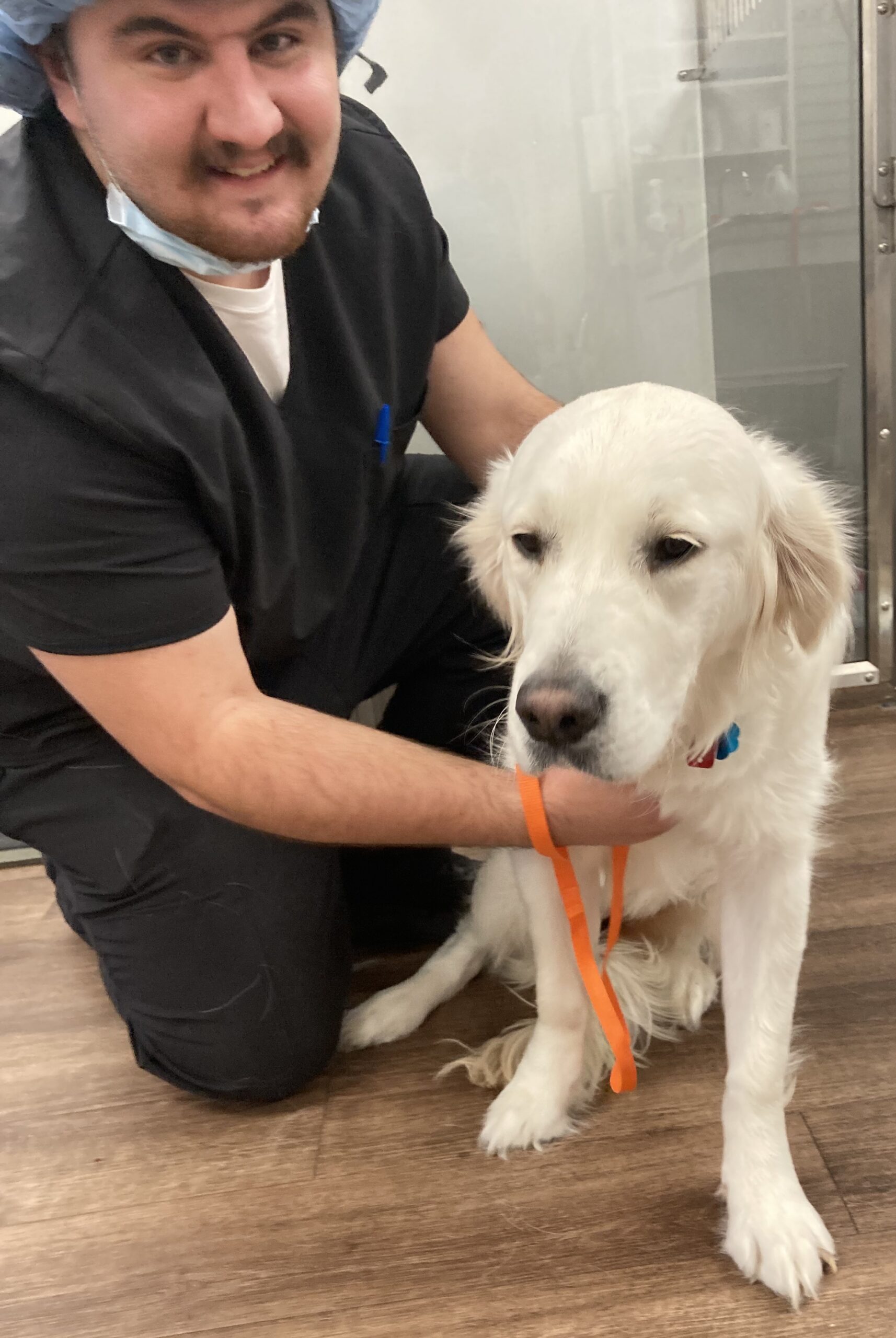
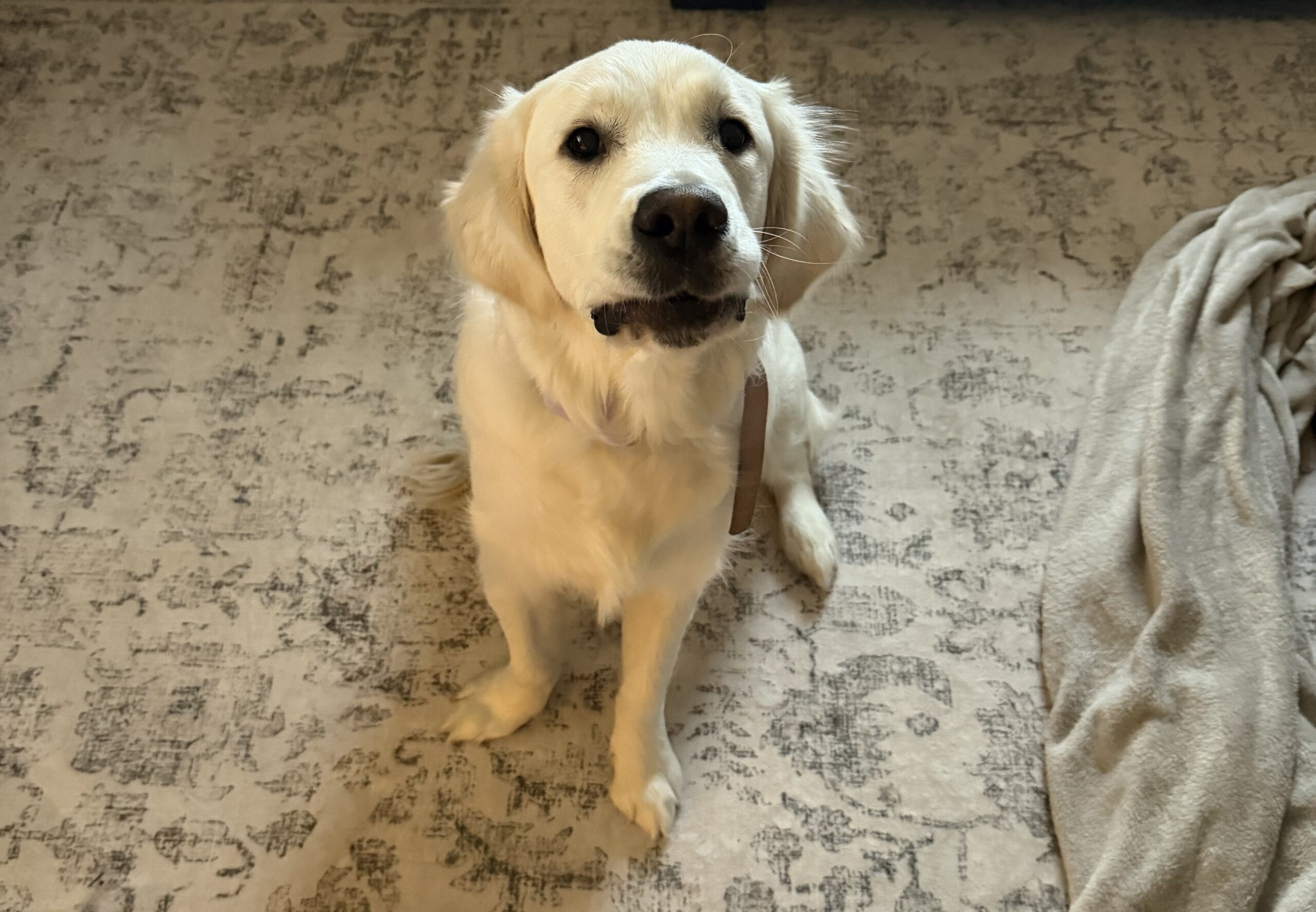
Lucy is a sweet 10-month-old Golden Retriever with a big personality and an even bigger heart. She was also living with a condition called radius curvus — a type of angular limb deformity that causes a crooked front leg in dogs.
When she was 8-month-old, her owners noticed something wasn’t quite right with her right front leg, after a long day of playing with other dogs.
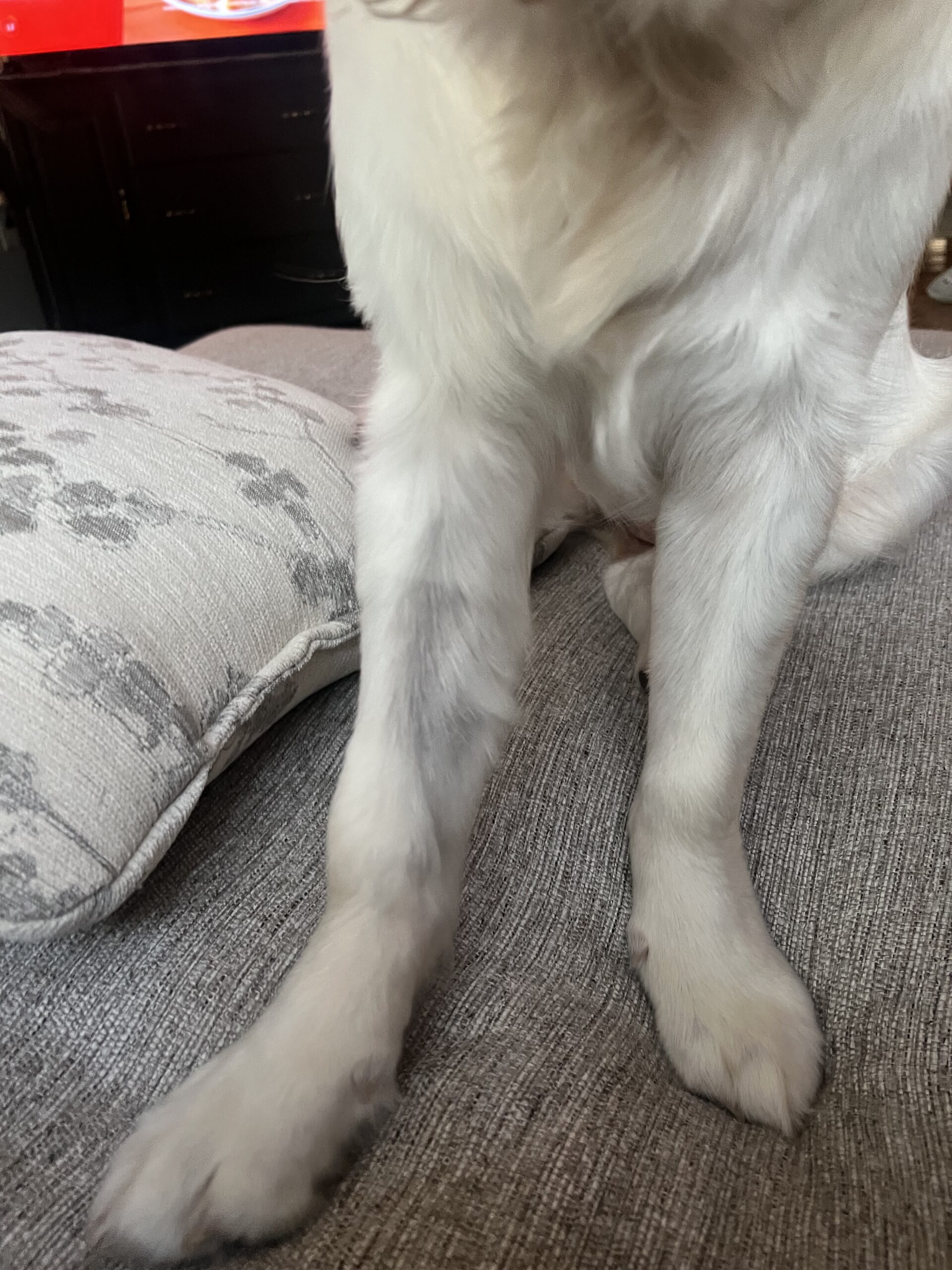
It wasn’t dramatic at first – just a subtle limp, and a slight bend outward in the paw.
Instead of waiting, they trusted their instincts, and that made all the difference.
HOW WAS LUCY’S LEG PROBLEM DIAGNOSED?
Lucy’s owner took her to the ER, where X-rays were taken.
“The ER vet suggested we visit with an orthopedic specialist,” she recalls.
That’s how she was referred to HRVSS.
After reviewing the X-rays and doing an orthopedic exam, we diagnosed Lucy with an Angular Limb Deformity, aka “radius curvus”.
What Is an Angular Limb Deformity IN DOGS?
An Angular Limb Deformity, or ALD, is a condition where one or more bones of the leg grow abnormally, causing the leg to bend and/or twist to one side.
This requires prompt evaluation by a board-certified veterinary surgeon.
In dogs, ALDs most commonly affects the front legs and is most often seen in young, growing dogs under one year of age.
It occasionally affects the back leg.
In dogs, the front leg below the elbow contains two bones: a large bone called the radius, and a small bone called the ulna.
These two bones must grow at the same rate for the leg to grow straight.
When one bone grows faster – or slower – than the other, the leg bends.
In Lucy’s case, that caused the paw to bend outward.
Many Basset hounds’ and Doxies’ front legs look like Charles Chaplin for the same reason.
The result is a characteristic deformity: the leg curves outward, the paw rotates, and the elbow can become unstable.
This leads to pain and arthritis.
Why Does It Happen?
The most common cause of premature growth plate closure is trauma – even minor trauma, like jumping down from the couch, that may go completely unnoticed at the time.
This is actually very important, because owners sometimes feel guilty when they hear the diagnosis.
They shouldn’t.
In many cases, the injury that triggered the problem was so minor that no one could have possibly noticed it.
Why Is Timing So Critical?
Lucy was 10 months old when we operated, and that timing matters enormously.
In a young, growing dog, the bones are still malleable and the body has a remarkable ability to remodel and adapt after surgery.
The longer an ALD is left untreated, the more severe the deformity becomes, and the harder it is to correct.
This is exactly why Lucy’s owners did the right thing by acting quickly after they noticed the problem.
HOW IS RADIUS CURVUS TREATED? WHAT DOES CORRECTIVE SURGERY INVOLVE?
Before anesthesia, Lucy’s owner felt “were worried and scared. Especially with how young she was, but (she) knew it would be the best thing for her long-term.”
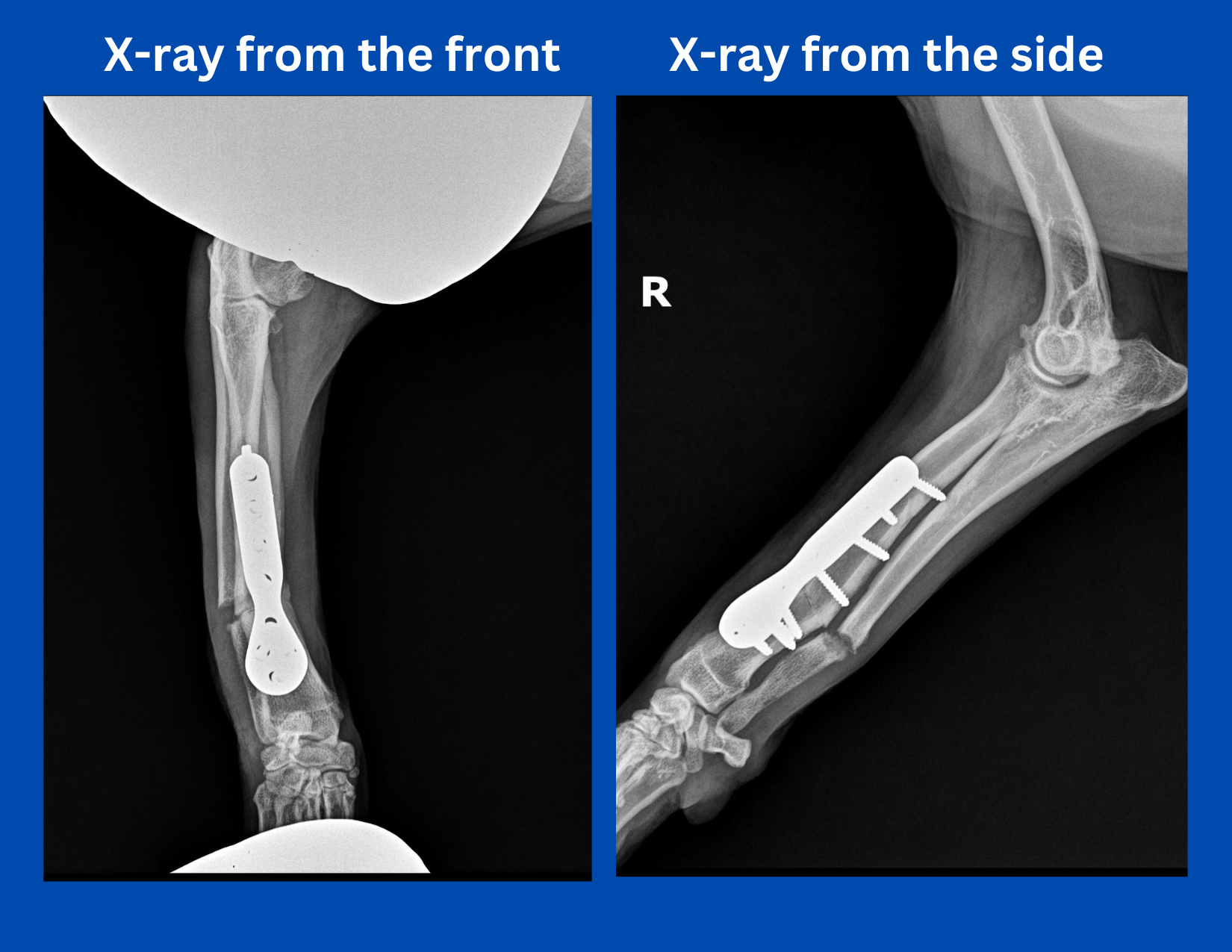
We performed a corrective osteotomy, which is a controlled, precise cut of the bone.
In Lucy’s case, we removed a 30 degree wedge or triangle from the radius.
This allowed us to realign the radius into its correct position.
We then secured everything in place with a bone plate and 8 screws to hold the bone aligned while it heals.
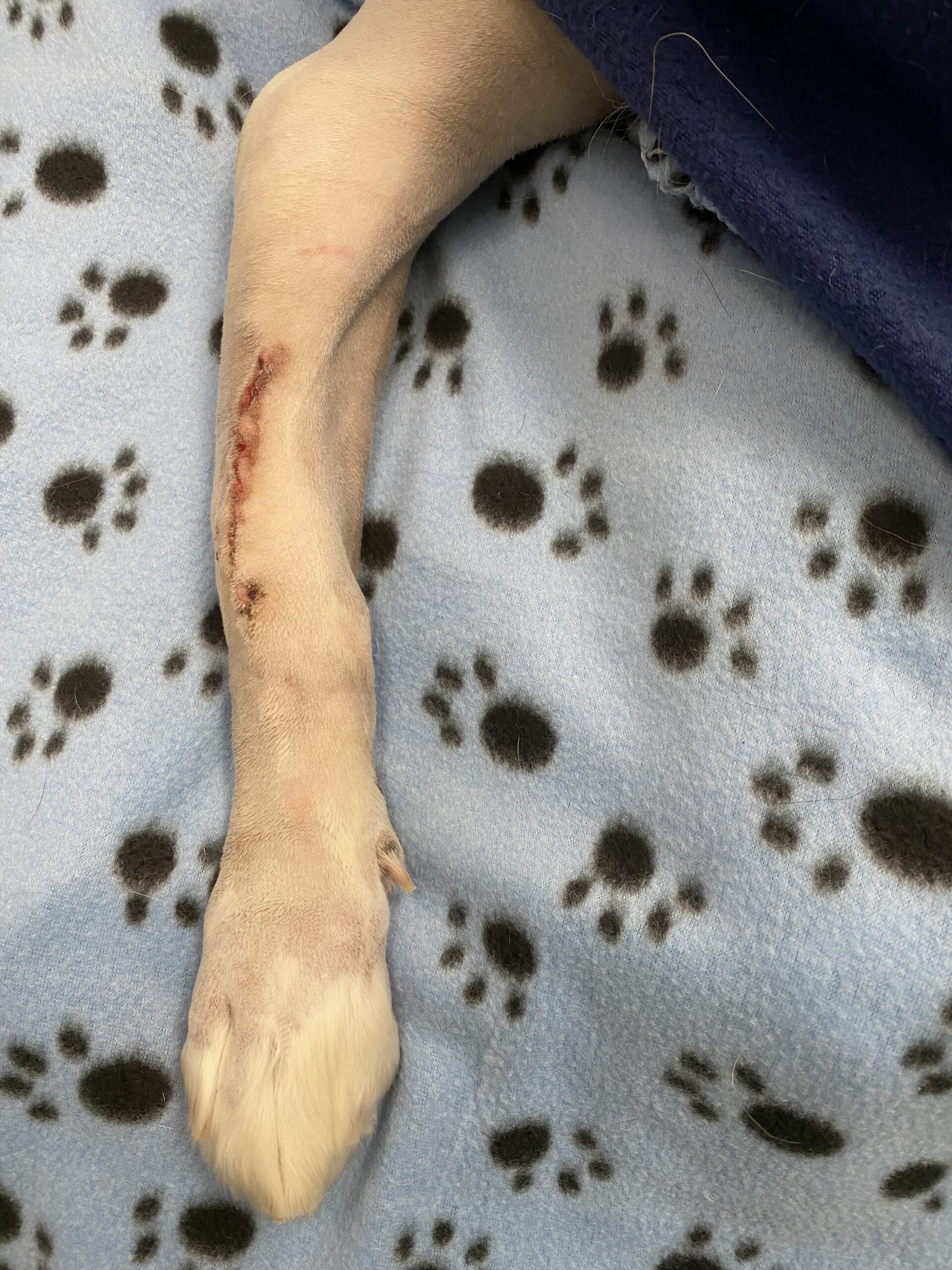
Lucy recovered in ICU with IV fluids, antibiotics and pain medications.
Her owner felt “so happy and relieved!” when she heard that Lucy recovered smoothly.
“We knew she was in good hands, but hearing that she was awake made us feel so much better.”
HOW IS A DOG’S RECOVERY AFTER ANGULAR LIMB DEFORMITY SURGERY?
After 2 months of healing and bandage changes, “Lucy is great. She is a happy and energized puppy still. We have gradually increased the distance of her walks little by little.”
In good hands, most dogs recover well after corrective osteotomy for radius curvus.
Her leg is straight, her gait is normal, and she is back to being the happy, energetic Golden she was always meant to be.
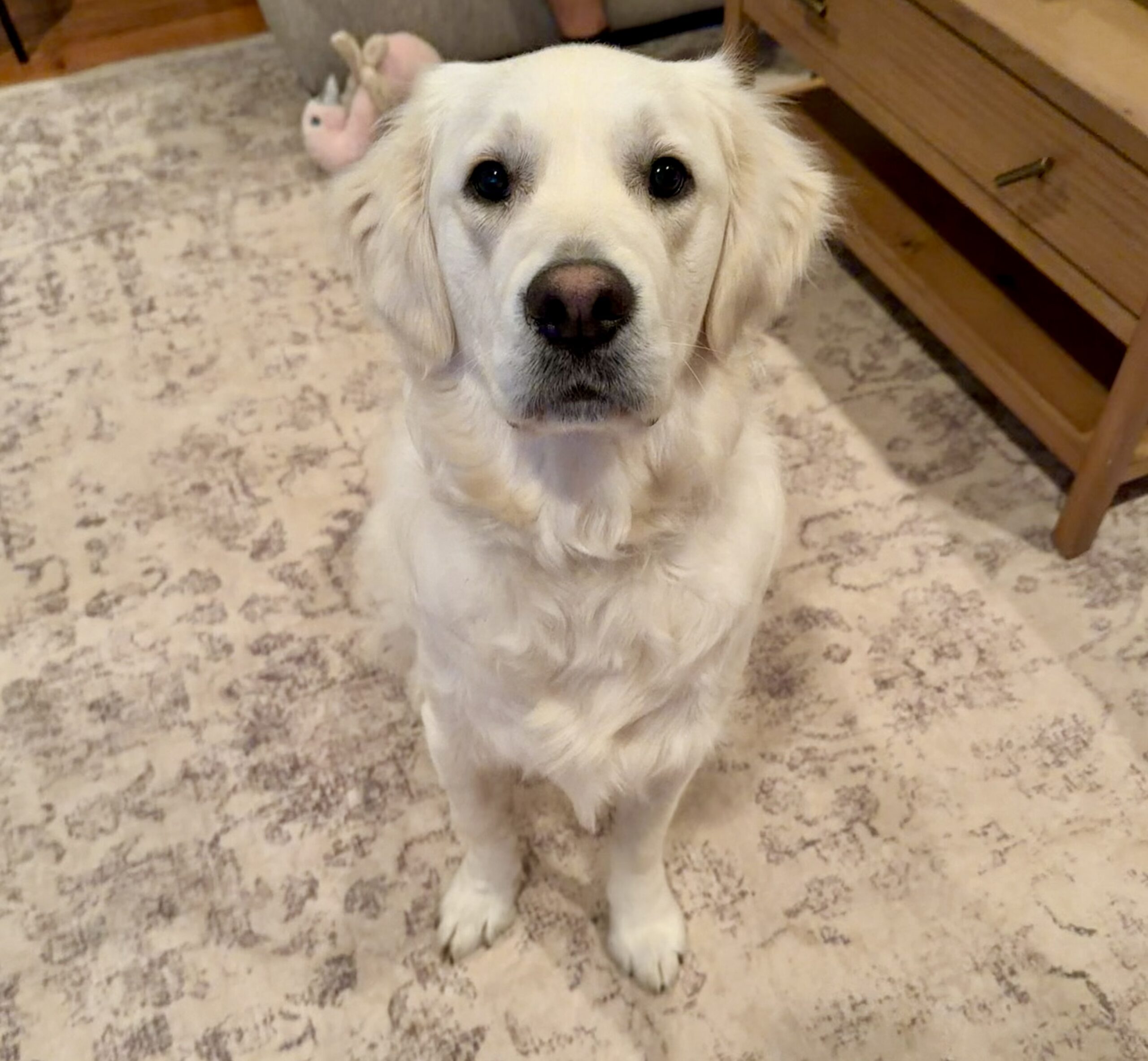
Over 1 year after surgery, Lucy is doing great and is enjoying her straight front leg.
WHAT ARE THE SIGNS OF ANGULAR LIMB DEFORMITY IN DOGS? WHAT SHOULD OWNERS WATCH FOR?
If you notice that your puppy’s leg looks crooked, bent, or asymmetrical – even mildly – don’t wait.
Early evaluation by a board-certified surgeon can make the difference between a straightforward correction and a far more complex procedure.
Trust your instincts, just like Lucy’s owners did.
If you would like to learn how we can help your pet with safe surgery and anesthesia, please contact us through www.HRVSS.com
Never miss a blog by subscribing here: www.HRVSS.com/blog
Phil Zeltzman, DVM, DACVS, CVJ, Fear Free Certified
Pete Baia, DVM, MS, DACVS
www.HRVSS.com