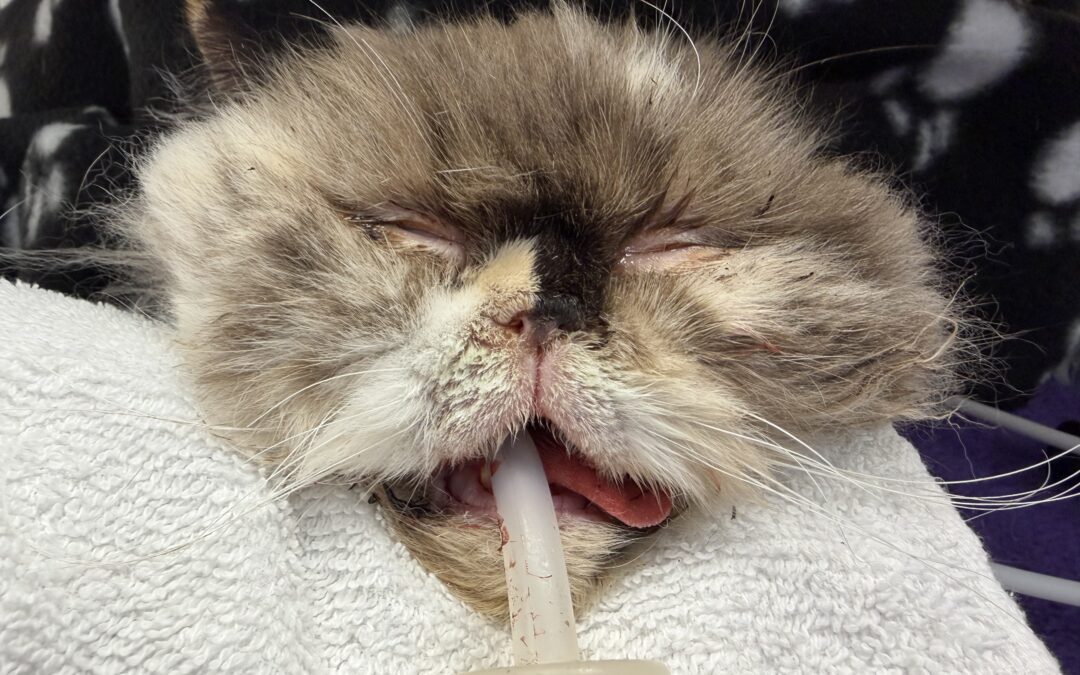
Would you believe that doing a “nose job” on a cat could change her life?
Rose, a sweet 4-year-old flat-faced, mostly blind Persian struggled for years with noisy breathing and poor appetite.
Her owner explains: “She has always been a very quiet, low energy, subdued kitty.”
Her family vet referred her to Harrisburg Regional Veterinary Surgical Specialty (HRVSS), and that changed everything. Here’s her story, in her own family’s words.
Why Do Flat-Faced Cats (And Dogs) Struggle to Breathe?
Pets with a flat face are called brachycephalic.
The 3 top cat breeds include the Persian, Exotic Shorthair, and Himalayan.
The 3 top dog breeds include the French Bulldog, English Bulldog, and Pug.
Because their entire face is “smooshed,” these pets very often have narrowed airways, which includes tiny nostrils (dogs also have issues with their soft palate, but let’s focus on Rose today).
That condition is all-too-often gets dismissed as a normal breed quirk.
Rose’s family knew this all too well.
As her owner explained, “The snoring, nasal congestion, and noisy breathing gradually became something we accepted as “normal.” We assumed it was simply part of being a Persian.”
What they didn’t realize was how much it was affecting her daily life.
Her owner recalls: “Her breathing became increasingly labored, especially while sleeping or after activity. She also had a consistently poor appetite… Eating always seemed like a struggle.”
Looking back, the connection was clear: “It’s hard to enjoy eating when it’s difficult to breathe comfortably at the same time.”
Rose’s Diagnosis: Stenotic Nares
Since the exam confirmed tiny nostrils (aka stenotic nares), surgery to widen them was recommended.
This would improve airflow.
During the consultation, we discussed the procedure and the care at home.
Naturally, her owner had reservations: “We were nervous. Any surgery is stressful, but airway surgery felt especially overwhelming. We had countless questions about the procedure, the risks, and what recovery would involve.”
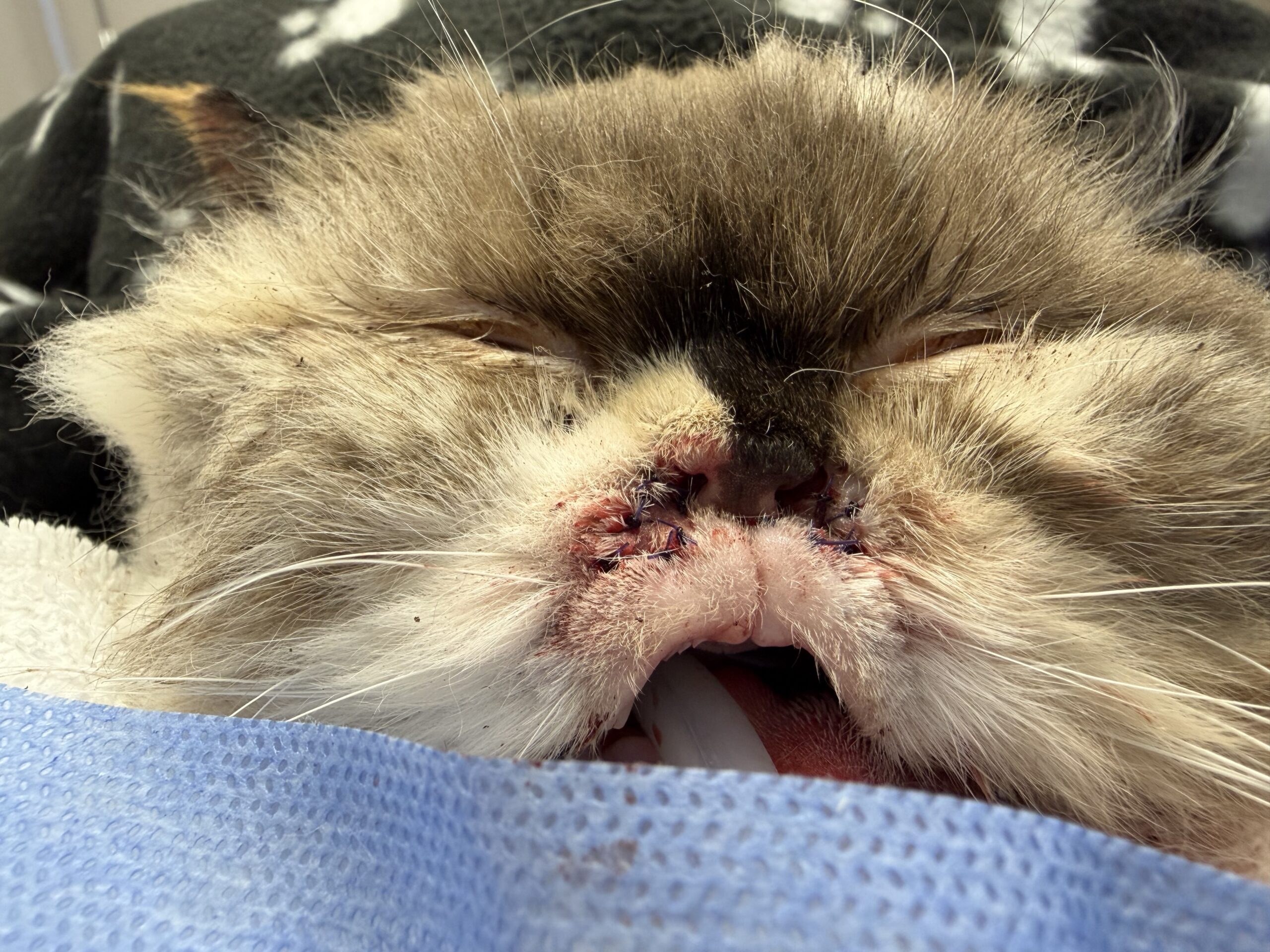
The HRVSS Experience: Care Before, During, and After Surgery
Rose’s owner felt supported, rather than rushed: “Every member of the team treated us with kindness, compassion, and patience… We never felt rushed or pressured – only supported.”
Rose stayed overnight after surgery for close monitoring, which gave her family real peace of mind: “Knowing she was being closely monitored while she recovered from anesthesia allowed us to rest easier, knowing she was exactly where she needed to be.”
The follow-up care stood out just as much as the surgery itself. “Dr. Zeltzman has personally checked in with us multiple times since Rose came home… That level of communication and genuine concern is something we honestly didn’t expect, and it has meant the world to us.”
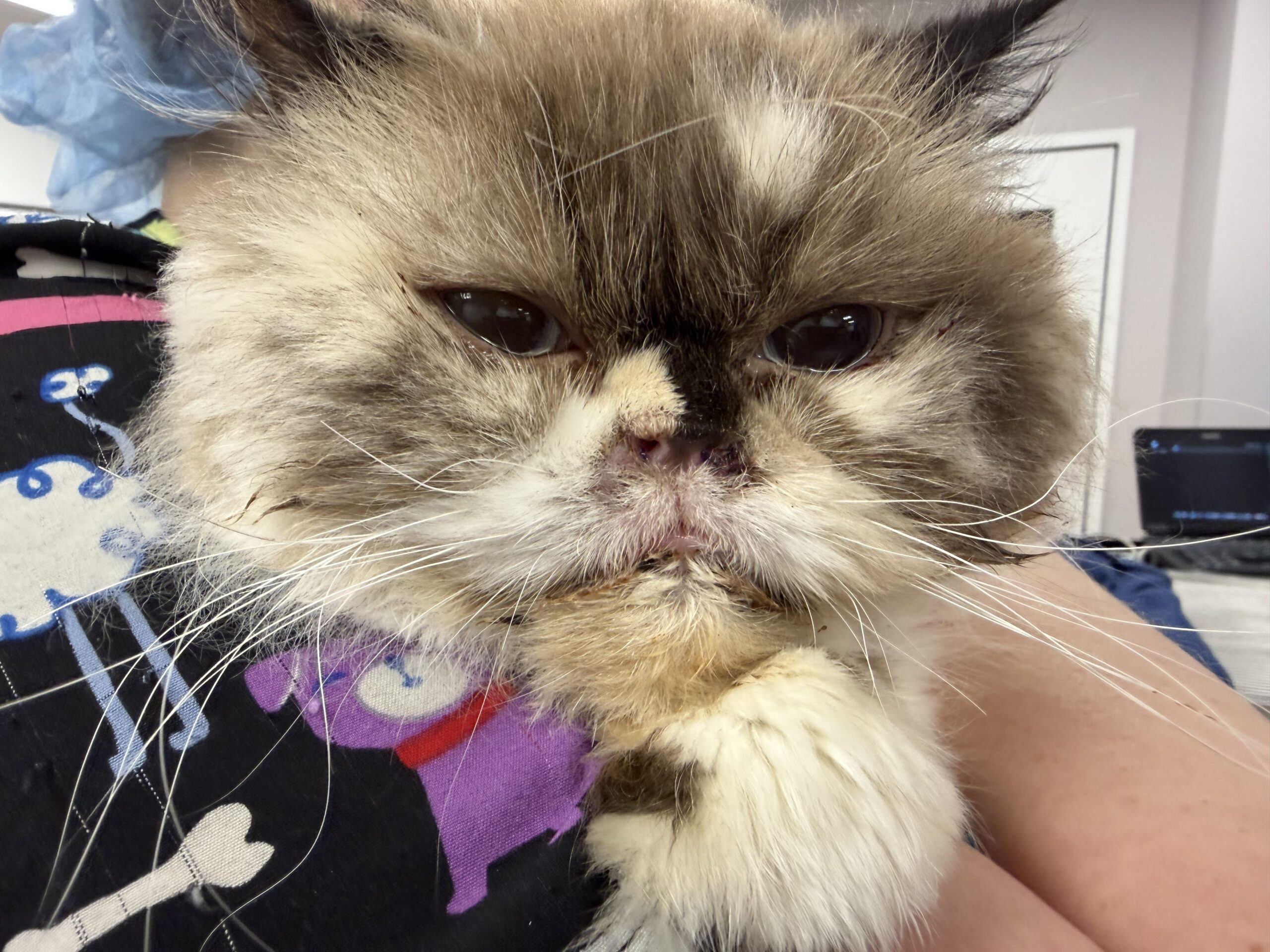
Before vs. After Surgery: Rose’s Amazing Transformation
Before surgery, Rose had labored breathing, even at rest, and loud snoring. Her appetite was poor. Mealtime “felt more like a chore.” Her energy was low all the time.
After surgery, Rose was a completely different cat!
“She is doing fabulous.”
Her breathing is quiet and easy, even during sleep.
Her energy level is increased.
For the first time ever, she demands to be fed.
“She’s the first one to remind us when it’s time for breakfast or dinner!”
“When we are cooking, she is in the kitchen watching us now.”
“If we sit in the living room to eat instead of at the dining room table, she hops up on the couch and wants to take a bite of whatever we are eating.”
“All of this has led to a tremendous change in her desire to eat and interest in all foods. I love her and enthusiasm and am so happy for her.”
Her owner observes: “I wonder if she’s experiencing the world through her nose for the very first time.”
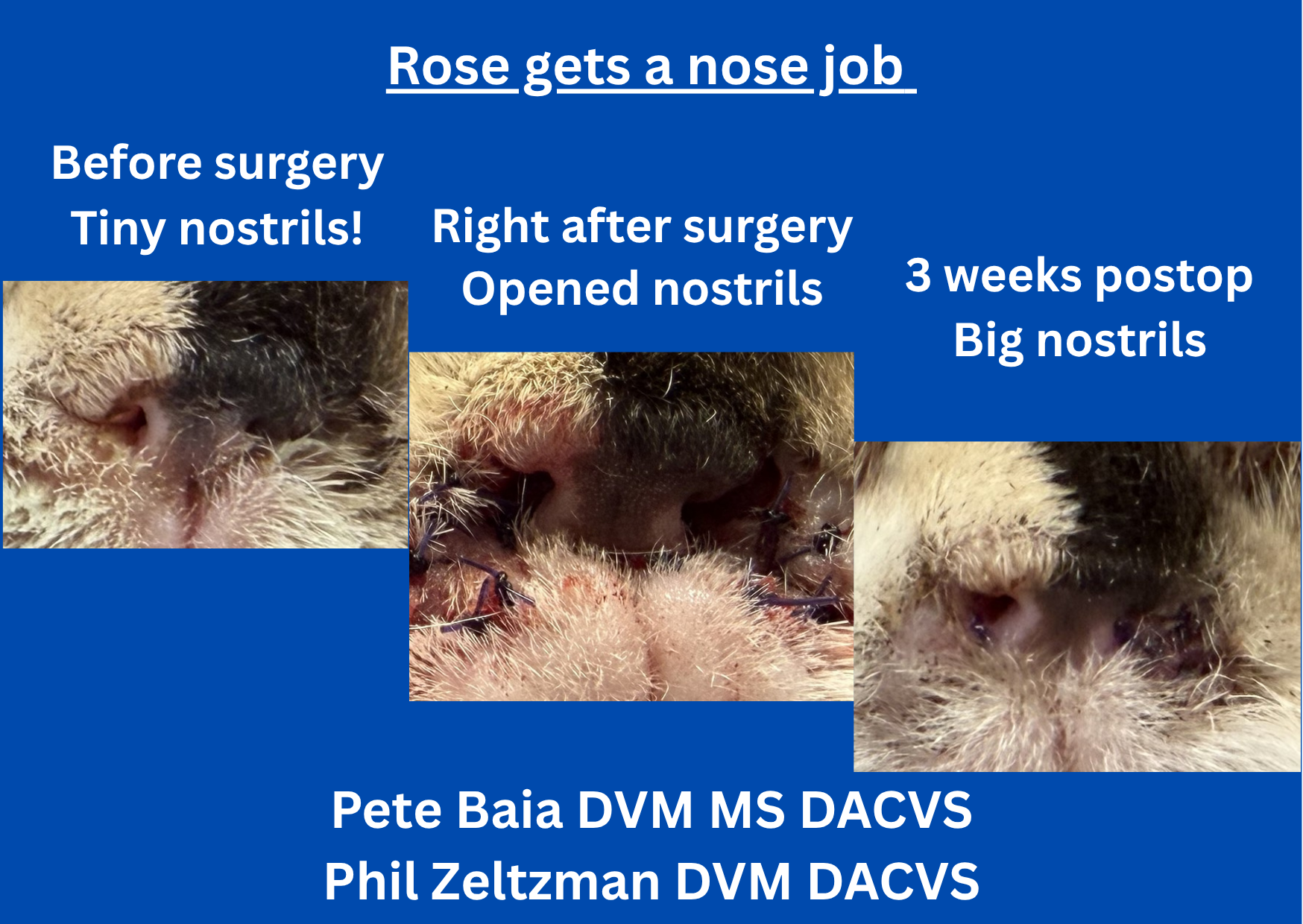
Working with the HRVSS team
Rose’s family sums up the experience: “The team didn’t just perform an exceptional surgery – they cared for Rose as though she were one of their own. They supported us every step of the way. That kind of care is rare, and we will never forget it. We can’t thank you and your team enough for making this possible.”
If your flat-faced cat (or dog) snores heavily, struggles to breathe comfortably, or seems low on energy, it may not be “just how they are.”
It could be a very treatable airway condition.
If you would like to learn how we can help your pet with safe surgery and anesthesia, please contact us through www.HRVSS.com
Never miss a blog by subscribing here: www.HRVSS.com/blog
Phil Zeltzman, DVM, DACVS, CVJ, Fear Free Certified
Pete Baia, DVM, MS, DACVS
www.HRVSS.com
Frequently Asked Questions
What is stenotic nares surgery in cats?
Stenotic nares surgery widens a cat’s abnormally narrow nostrils, a common issue in flat-faced breeds like Persians, to improve airflow and breathing comfort.
How do I know if my Persian cat needs airway surgery?
Signs include snoring, noisy or labored breathing (especially during sleep or after activity), poor appetite, and low energy. If these sound familiar, a consultation with a surgeon can determine if surgery may help.
What does recovery from feline airway surgery look like?
Cats typically heal in 3 weeks after surgery.
Can airway surgery really change a cat's quality of life?
Yes. Widening the airway can significantly improve breathing, appetite, and energy levels, especially in brachycephalic cats whose symptoms have been mistaken for normal breed traits.
Who performed Rose's surgery?
The surgeons at Harrisburg Regional Veterinary Surgical Specialty (HRVSS.com) in Harrisburg, PA. All we do is surgery. Let us know how we can help!