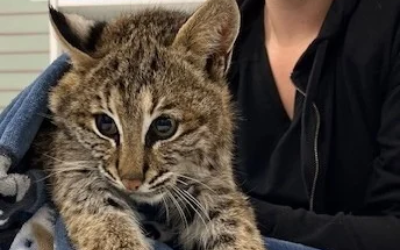
The subject line of the email was pretty compelling: “HELP! Bobcat with 2 fractured legs”
The author, Dr. Jana Parson, at Companion Animal Hospital, works with a rescue, and they had brought a very broken bobcat to her.
She kindly wrote: “I knew HRVSS was the best place for helping a wild animal, due to your willingness to always get on the phone and offer advice and your perspective quickly.”
A phone call later, we all agreed to fix this 10 month old, 10 lb wild bobcat – on the same day.
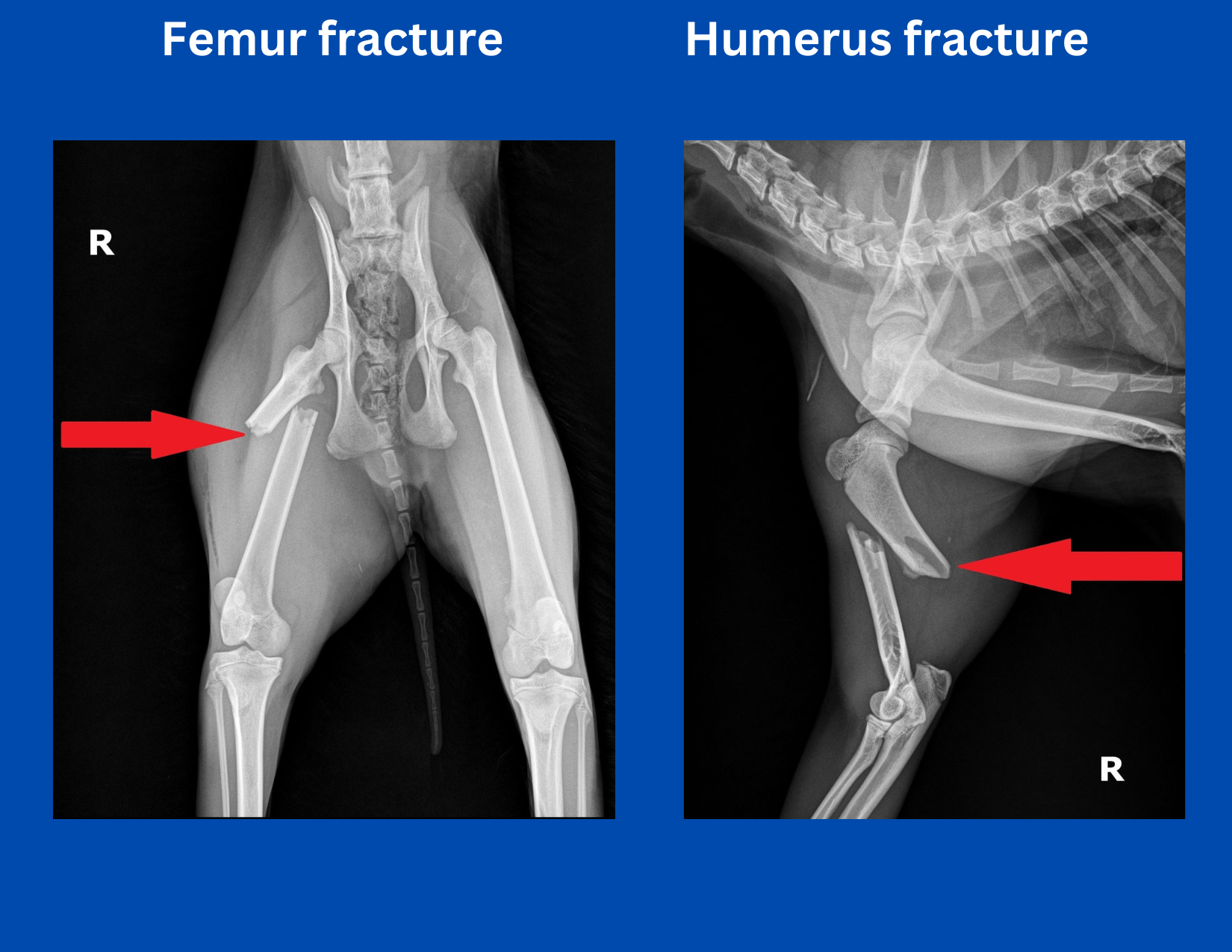
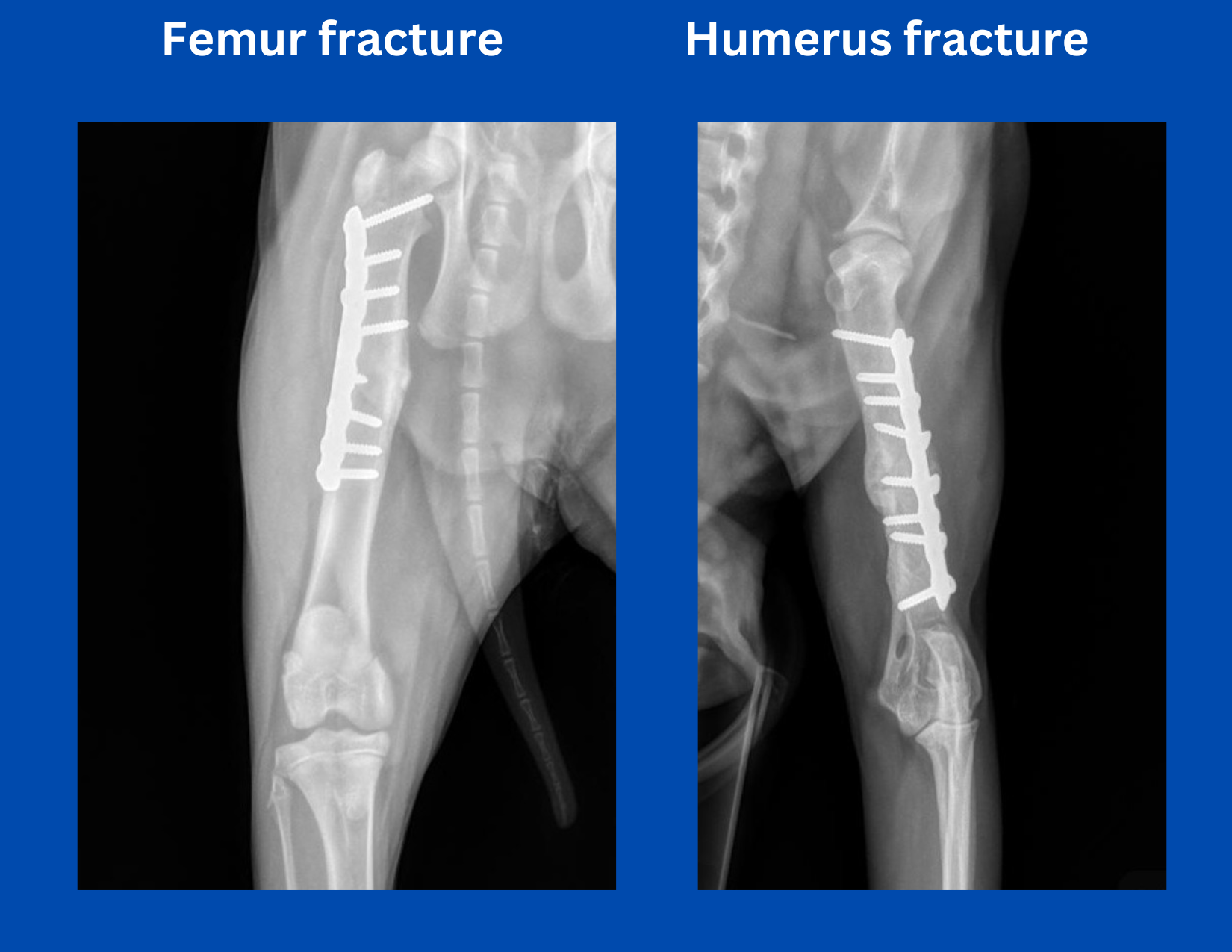
Bobbie, as we creatively named her, had been hit by a car, and she had the injuries to prove it: a broken right humerus and a broken right femur.
Two broken bones.
One shy, wild animal.
One chance to get it right.
What Is a Humerus Fracture? What Is a Femur Fracture?
The humerus is the long bone of the arm, running from the shoulder to the elbow.
The femur is the long bone of the leg, running from the hip to the knee.
A fracture in both bones is a serious situation that demands serious surgical attention.
What Makes a Wild Animal Different?
Treating a wild animal is a reminder that veterinary surgery extends well beyond our pet dogs and pet cats.
Anesthesia in wild cats also requires careful planning and monitoring, as their response to drugs can be different from domestic cats.
Every decision – from drug selection to implant choice – had to be tailored specifically to this patient.
How Did Bobbie Behave?
Here is where Bobbie’s story takes a remarkable turn.
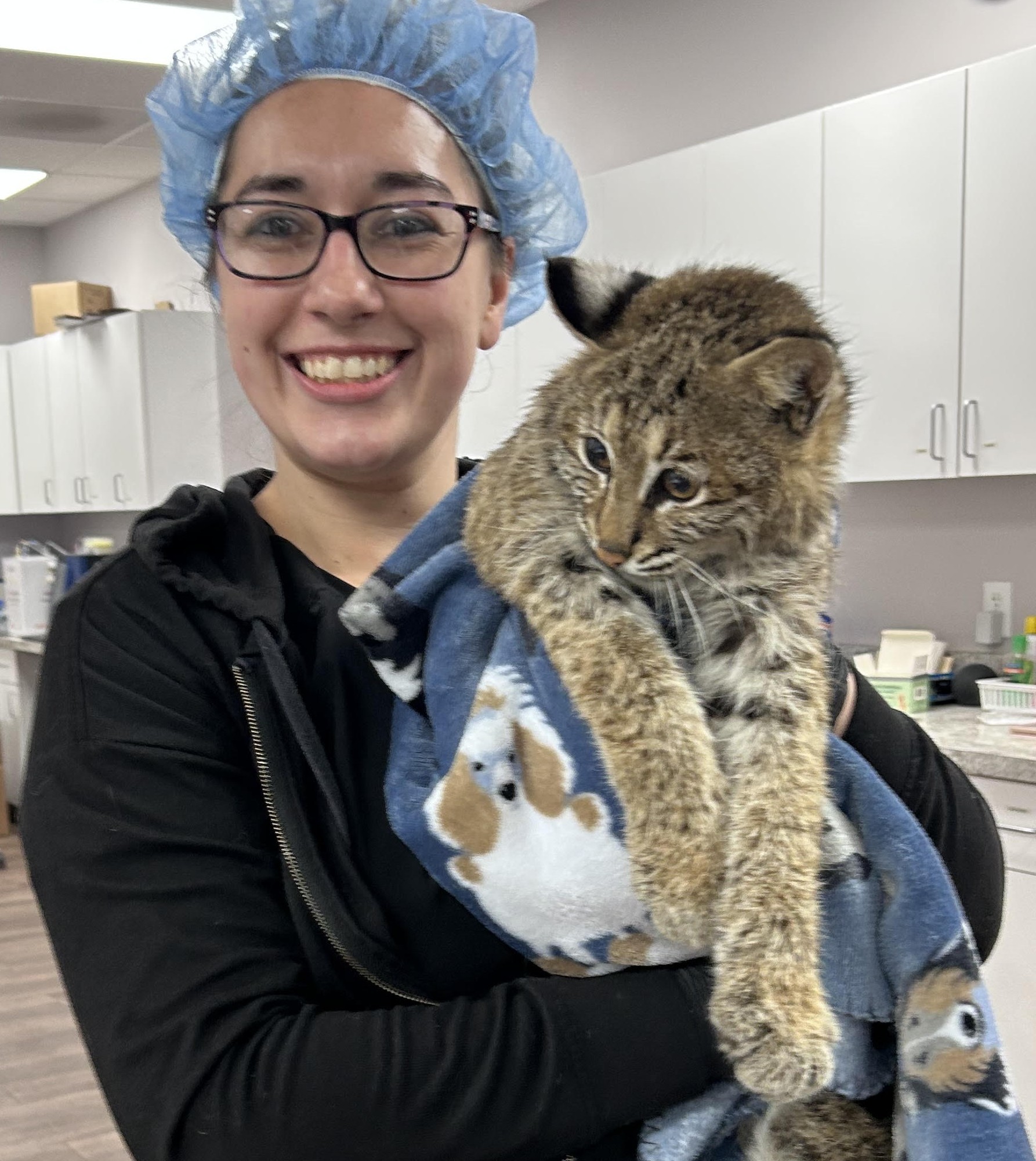
Despite being a wild animal in an unfamiliar environment, in pain, and surrounded by complete strangers, no matter how loving, Bobbie was weak and lethargic, and therefore, calm.
Calm enough that our nurses were able to place an IV catheter and provide treatments with minimal stress.
We have worked with many animals over the years.
A cooperative wild bobcat is not something we take for granted.
It made a difficult situation just a little easier…
How Were the Fractures Repaired?
Each fracture was stabilized with a bone plate and 8 screws.
Bone plating is one of the strongest techniques to fix bones in vet surgery.
The plate holds the broken ends of the bone in precise alignment while healing takes place.
For a 10 month old animal, Bobbie’s bone was harder than we would have expected – a testament, perhaps, to the physical demands of life in the wild, even at a young age.
The Unsung Heroes: Wildlife Rehabilitators
As soon as Bobbie had recovered sufficiently from anesthesia, she was transferred back to Raven Ridge Wildlife Center, under the care of Tracie and her team.
This is where the real work begins – and it is work that deserves far more recognition than it typically receives.
Wildlife rehabilitators like those at Raven Ridge dedicate their lives to giving injured wild animals a second chance.
They provide round-the-clock care, specialized nutrition, and the kind of patient care that bridges the gap between surgery and freedom.
Without them, the best surgical repair in the world means very little.
In addition, they had to minimize interactions with Bobbie so that she would remain a wild animal, capable of surviving in her native environment – and that requires serious knowledge.
We are so grateful for their partnership, their trust, and for everything they do.
You can learn more about their incredible work at www.ravenridgewildlifecenter.org
How Is Bobbie Doing Now?
2 months after surgery, Tracie at Raven Ridge writes “She is gaining weight, walking on all 4 legs, well-muscled. X-rays show nice bone healing of both bones.”
3 months after surgery, we received a new update: “Bougie is doing fantastic, and you would never know to see her that anything was wrong with her”
Oh yeah, because of her behavior and high maintenance, Bobbie was renamed Bougie!
The new plan was to move Bobbie to a larger enclosure so she could exercise, rebuild muscle, and rediscover what her legs are capable of.
After a few more weeks, the goal was to release her back to the Wild.
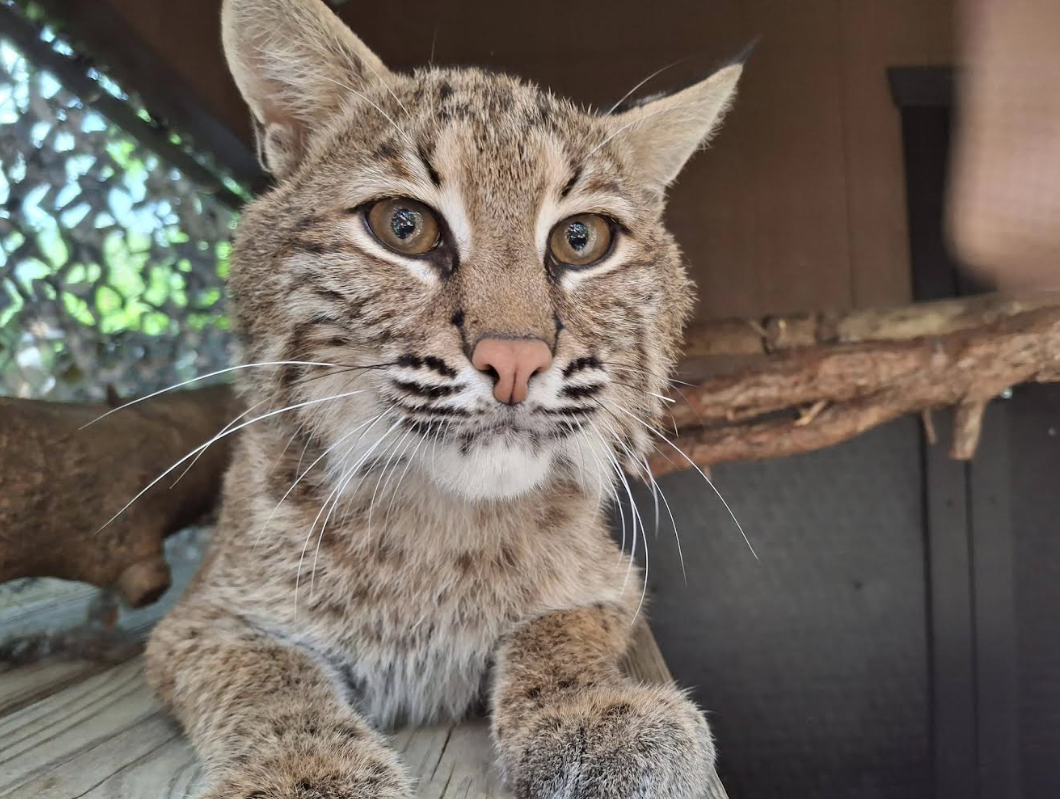
She grew into a gorgeous animal…
What Is the Lesson Here?
Vet surgery does not begin and end with our dogs and cats.
When the opportunity arises to help a wild animal, it is a privilege we take very seriously.
The skills, the implants, and the principles are largely the same.
But the stakes feel different when you know that a successful outcome means an animal gets to return to its natural life, free and wild.
It’s also a very cool story that involved the community at large. Beyond the vets, the surgeons, and the caretakers, there were a very dedicated game warden, multiple donors, a company that donated 120 pounds of chicken legs, and so many more stakeholders.
What Happened to Bougie?
The day of her release, all of Bougie’s entire care team was there: the game warden, Dr. Parson (her referring vet), Tracie (with Raven Ridge Wildlife Center) and her team of rockstars, etc.
We wouldn’t have missed it for the world!
Caring for a patient for months, watching her grow from a broken kitten to a beautiful adult, catering to her every need… and then releasing her to the Wild…
It was a very emotional moment.
It’s difficult to explain the emotions in words, so instead we will let you watch this short video.
If you would like to learn how we can help your pet with safe surgery and anesthesia, please contact us through www.HRVSS.com
Never miss a blog by subscribing here: www.HRVSS.com/blog
Phil Zeltzman, DVM, DACVS, CVJ, Fear Free Certified
Pete Baia, DVM, MS, DACVS
www.HRVSS.com