
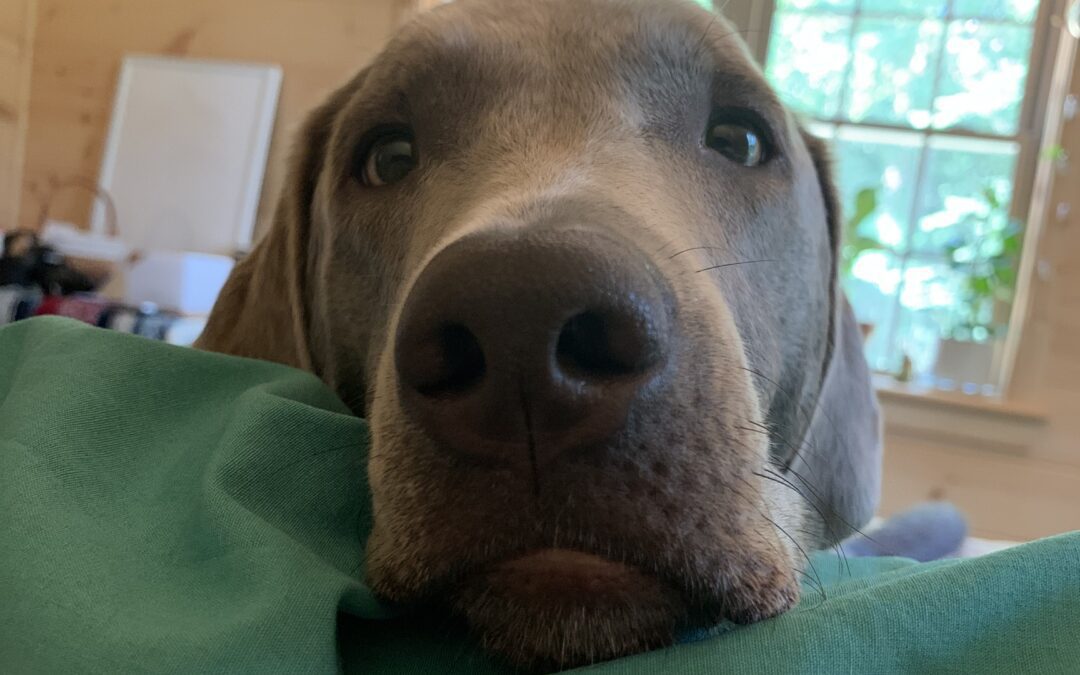
Ivy, a 7-year-old Lab, was in severe pain.
Her owner recalls: “Ivy began leaving spots wherever she’d lay and started licking her vulva nonstop over 1 year ago. I took her to our family vet. Ivy does not tolerate physical exams well and requires sedation prior to visits. Even with sedation, the exam was essentially a wrestling match, and my vet was probably able to get only a brief 30-second look. I brought photos of the bloody spots. We proceeded with a urine analysis and antibiotics. The test was negative, yet the licking and drainage resolved on antibiotics! 6 months later, we were right back where we started. She was given another 3 week course of antibiotics. We returned to the vet and were referred to HRVSS.”
It got worse: “By then, I was spending nights awake trying to interrupt the licking cycle. Ivy would lick, yelp, lick, yelp… She would sit and press her bottom against the floor. Her anxiety was extremely high. She wore a plastic cone collar and required a sedative to stay calm.”
Her owner continues: “Up until that point, we did not have a diagnosis. When I spoke to the nurse on the phone and described Ivy’s symptoms, she immediately knew what the issue was. Our family vet had shared his thoughts on possible causes. The dreaded word “cancer” had even been mentioned. Again, Ivy would not allow a thorough exam. Knowing there was a clear path forward made me feel relieved and hopeful.”
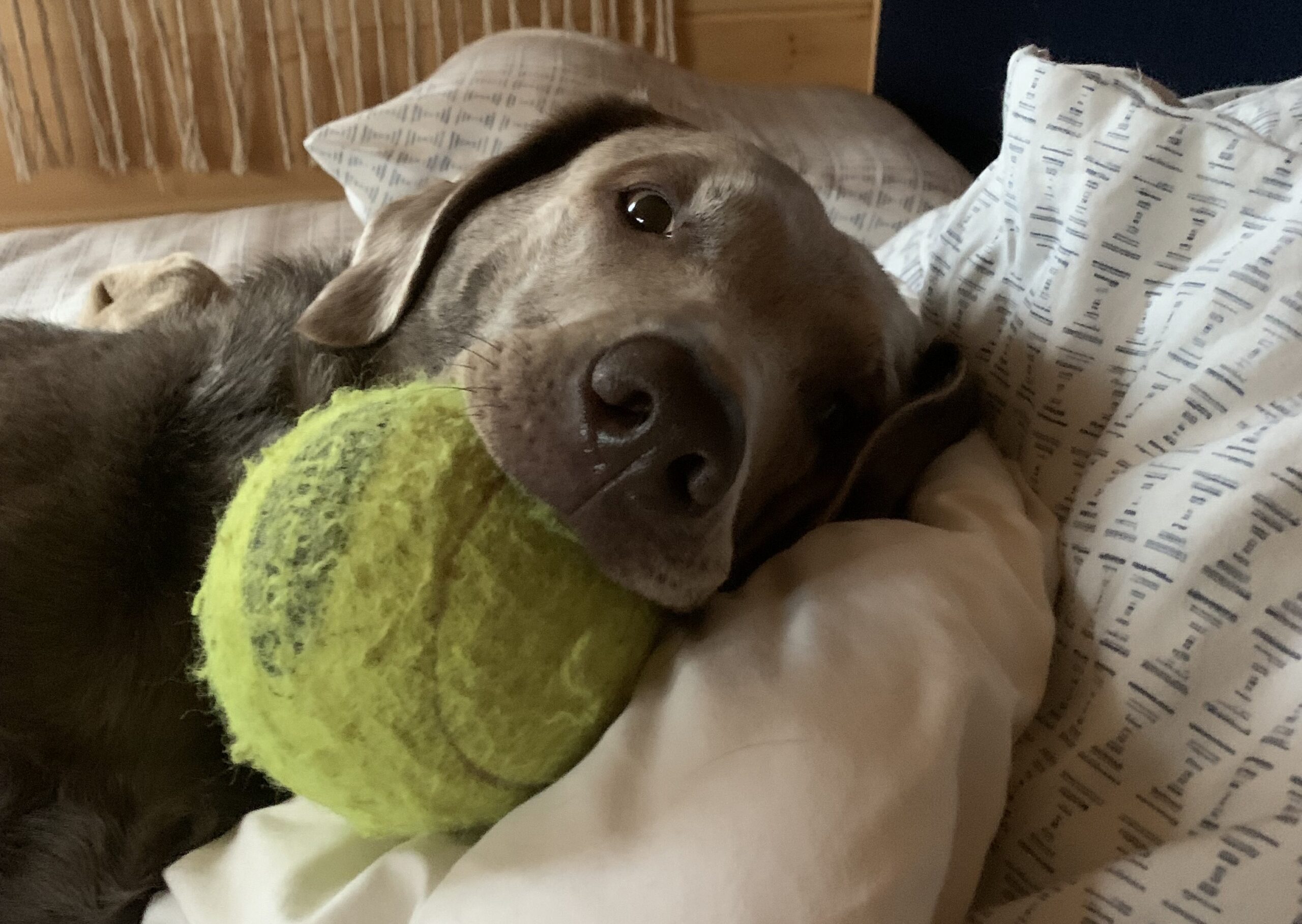
That’s when Ivy was referred to HRVSS.
WHAT IS A RECESSED VULVA IN DOGS?
Ivy had a common but often overlooked condition where extra skin covered her vulva.
There are many names for the condition, including redundant vulvar fold, or a recessed vulva.
In dogs, and occasionally in cats, a recessed vulva occurs when excess skin folds over and hides the vulva, creating a warm, dark, and moist environment where bacteria thrive.
Her family vet noticed that her vulva was swollen, her skin infected, along with a discharge.
That’s why she was referred to HRVSS.
WHAT ARE THE SIGNS OF A RECESSED VULVA IN DOGS?
The most common signs of a recessed vulva in dogs include:
- Ongoing licking of the vulva
- Bloody or purulent (pus) discharge
- Recurrent bladder infections that clear on antibiotics but keep returning
- Skin sores (ulcers) around the vulva
- Urine scald – skin irritation caused by urine pooling in the skin fold
- Pain, restlessness, and anxiety
Ivy showed every single one of these signs.
WHAT DOES SURGERY FOR A RECESSED VULVA INVOLVE?
Once the skin around the vulva was clipped, the real extent of the damage appeared.
These are classic findings of a redundant vulvar fold:
- The vulva was barely visible
- Open sores in the skin (ulcers)
- Burned skin due to urine pooling in the fold (urine scald)
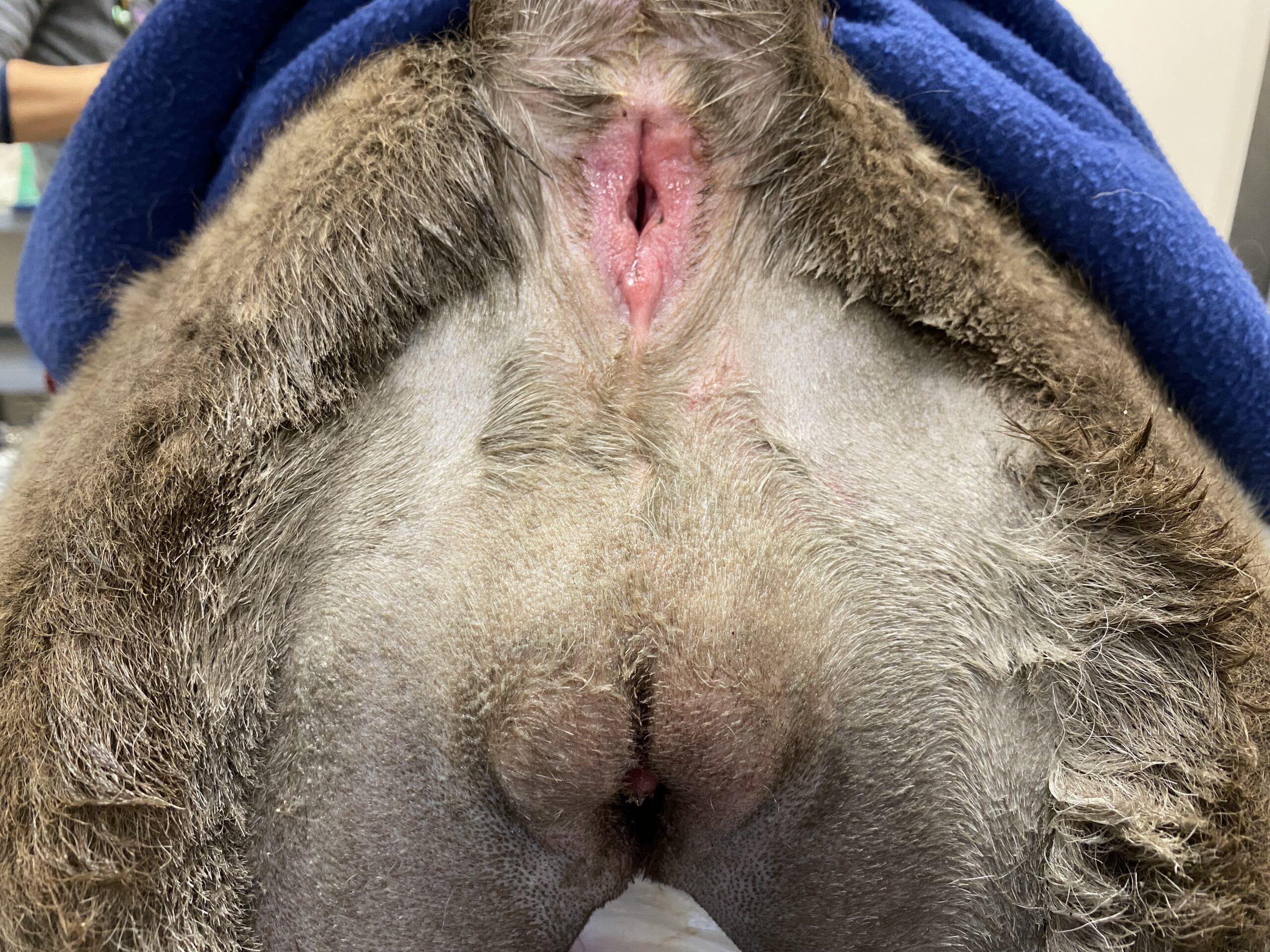
This is Ivy’s back end right before surgery. You can barely see her vulva.
Before surgery, Ivy received a coccygeal block – similar to an epidural – to numb her back end and help with pain management.
In the following picture, Dr. Baia is holding the extra skin fold up with surgical instruments to show the size of that fold.
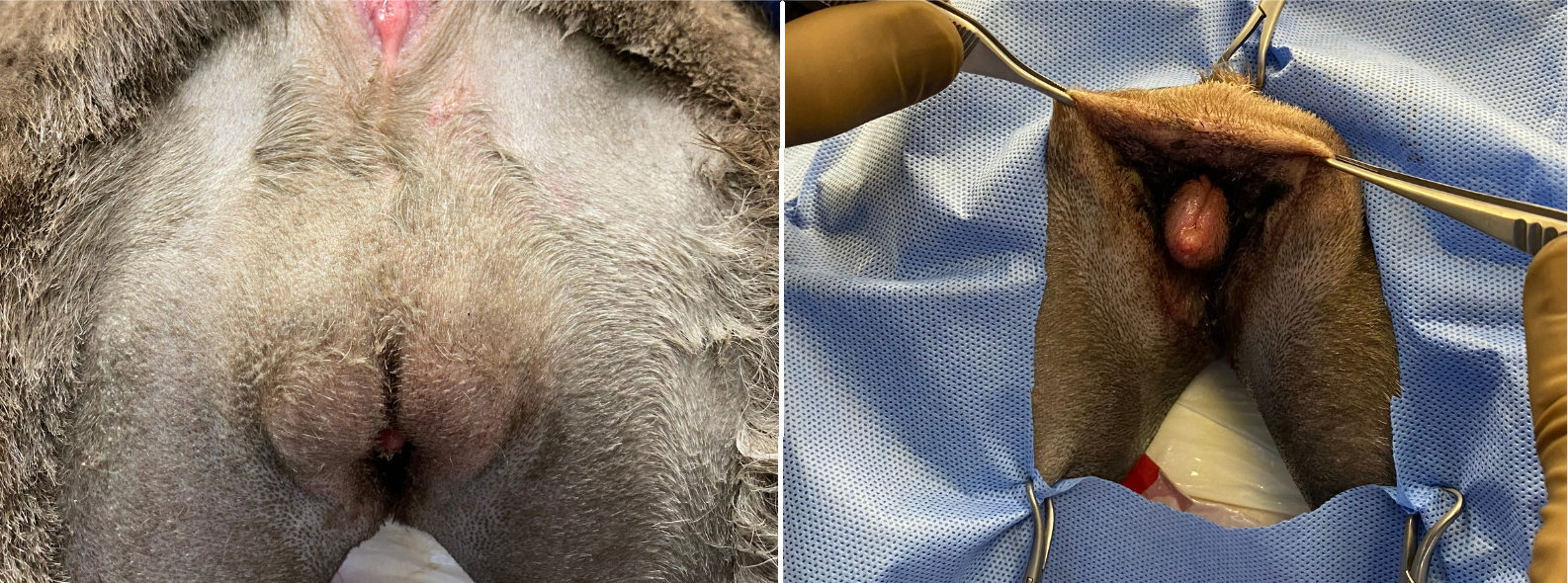
You can see how much extra skin Ivy had.
There are 2 names for the surgery Ivy needed:
- vulvoplasty
- or episioplasty.
The goal of surgery for a recessed vulva is to remove exactly the right amount of extra skin – enough to expose the vulva fully, but not so much that closing the skin becomes difficult.
If you don’t remove enough skin, the surgery won’t be as successful.
If you remove too much skin, then you have a big problem to close the skin and with healing.
This is where experience is critical.
Dr. Baia removed exactly the right amount of skin, then stitched it back up.
And this is how it looked after surgery: the vulva is now clearly visible.
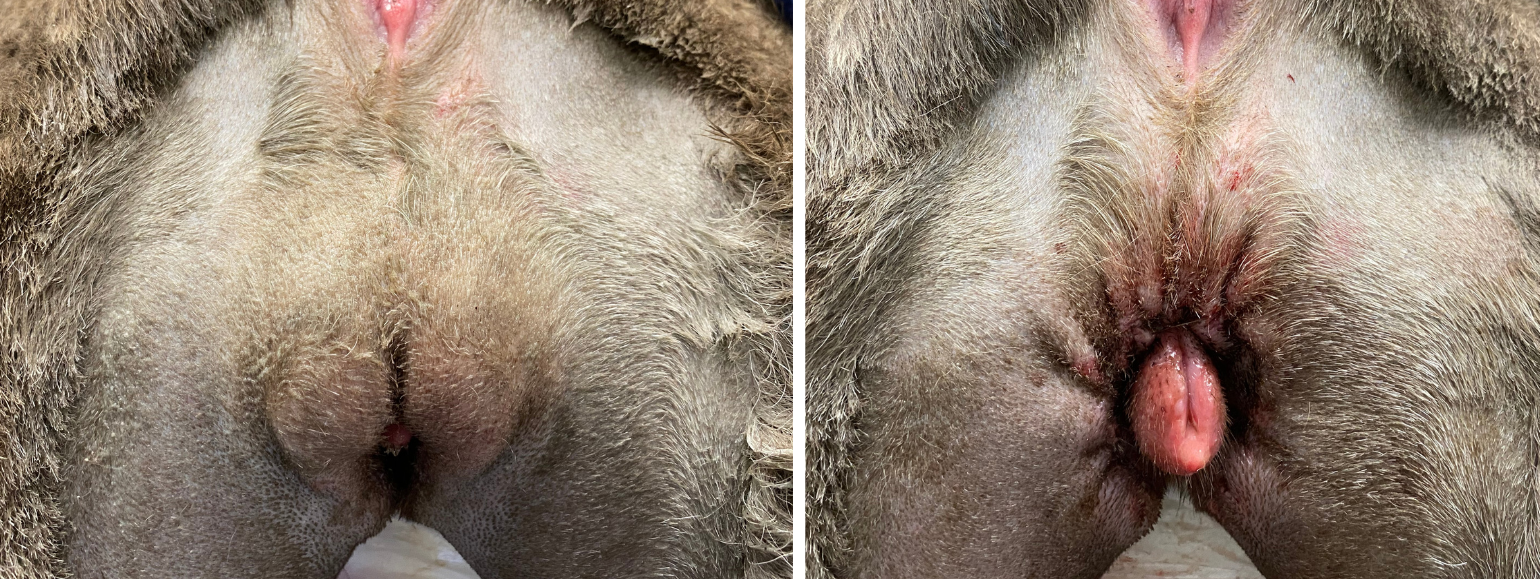
After surgery, you can see the vulva
WHAT IS RECOVERY LIKE AFTER RECESSED VULVA SURGERY IN DOGS?
Ivy stayed one night in the hospital on IV fluids, antibiotics, and pain medications.
She went home the following day to rest and heal over the next 3 weeks.
And after 3 weeks, this is how her back end looked:
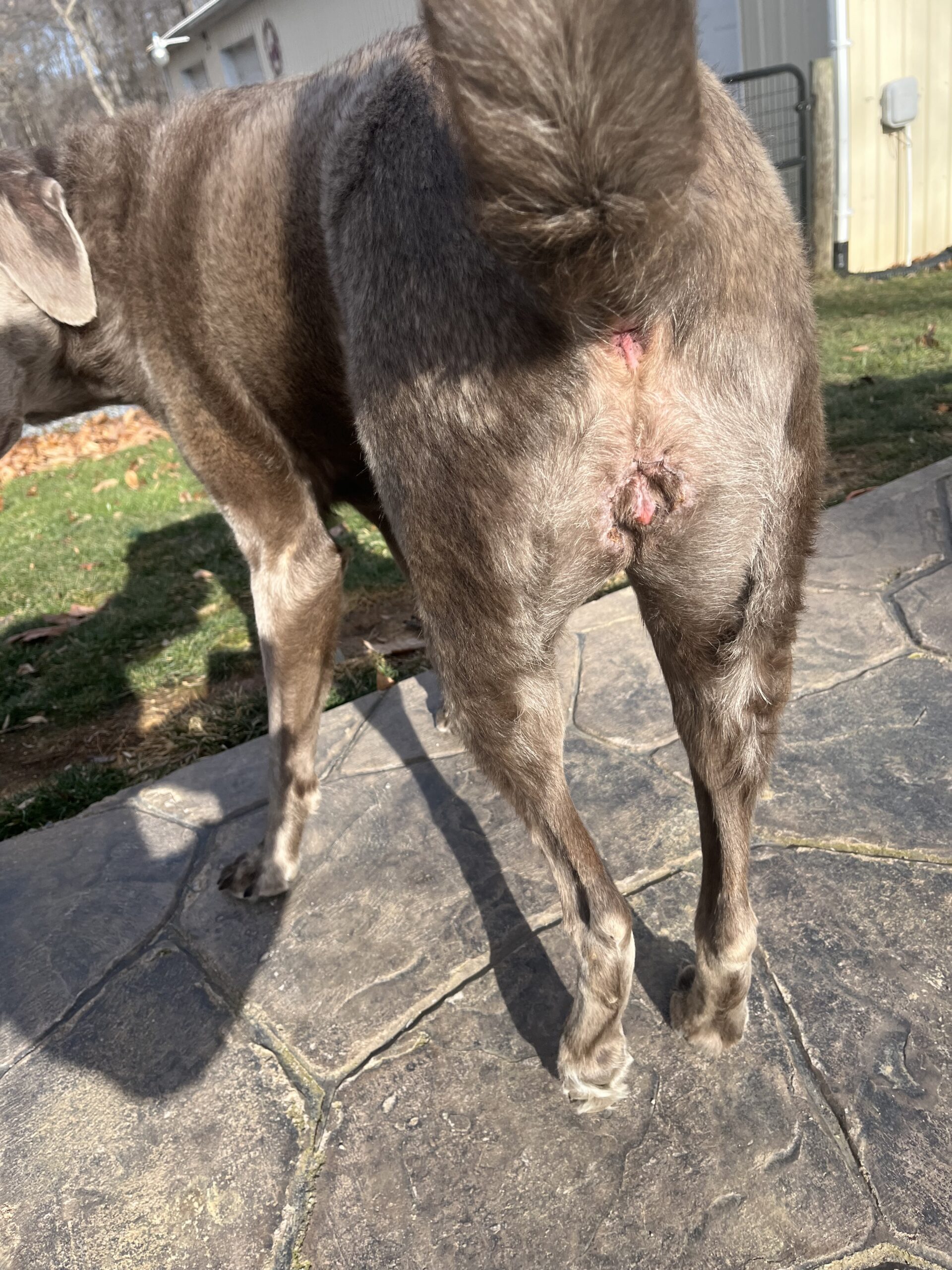
After 3 weeks, Ivy’s skin healed nicely
Most dogs recover well after recessed vulva surgery, with full healing typically complete within 3 weeks.
HOW IS IVY DOING NOW?
Ivy can now enjoy a pain-free, infection-free life and play ball again.
Her owner concludes: “2 months after surgery, we have our Ivy back. There is no drainage and no licking. Ivy will not allow me to examine her surgical site directly, but I catch glimpses of it from time to time and it looks great.”
“For what Ivy went through and for my peace of mind, it was worth every penny – and the drive. It was over 1 hour away, but for Ivy, I would have driven 4 hours or more without hesitation!”
WHAT SHOULD DOG OWNERS KNOW ABOUT RECESSED VULVA?
If your female dog has recurring vaginal discharge, ongoing licking, or repeated urinary tract infections that keep coming back despite antibiotics – don’t wait.
A recessed vulva is a very treatable condition – only when properly diagnosed.
Early evaluation by a board-certified surgeon can spare your dog months of unnecessary pain.
Trust your instincts, just like Ivy’s owner did.
THE SCIENCE BEHIND A RECESSED VULVA
Why is having extra skin around the vulva such a big deal?
- It traps urine in the skin fold, and it sits there, 24/7. This creates a warm, dark, and moist environment. This is a perfect culture medium for bacteria. So they thrive, multiply, and create a local infection.
- The extra fold means there is (haired) skin touching (haired) skin, which creates something called “micro-trauma”. The (haired) skin moves around, it causes tiny holes in the skin. Those open sores make it easier for bacteria to cause a deeper infection.
- Even though Ivy didn’t seem to have a proven bladder infections, this is a classic feature of this condition. It happens because females have a wider urethra (the tube leading urine out of the bladder), which makes it easy to bacteria to travel from the infected skin, through the urethra, and into the bladder. Repeated bladder infections despite antibiotics are a classic complaint when we see these patients, and a reason to refer to a surgeon.
If you would like to learn how we can help your pet with safe surgery and anesthesia, please contact us through www.HRVSS.com
Never miss a blog by subscribing here: www.HRVSS.com/blog
Phil Zeltzman, DVM, DACVS, CVJ, Fear Free Certified
Pete Baia, DVM, MS, DACVS
www.HRVSS.com